Companies are seeking more affordable ways to deploy artificial intelligence while retaining control over their data and intellectual property, as businesses move beyond experimentation towards large-scale adoption of the technology.
The shift is increasing interest in AI systems that allow organisations to move workloads between infrastructure providers, reduce dependence on individual vendors and manage the costs of running advanced models.
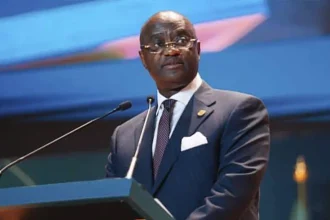
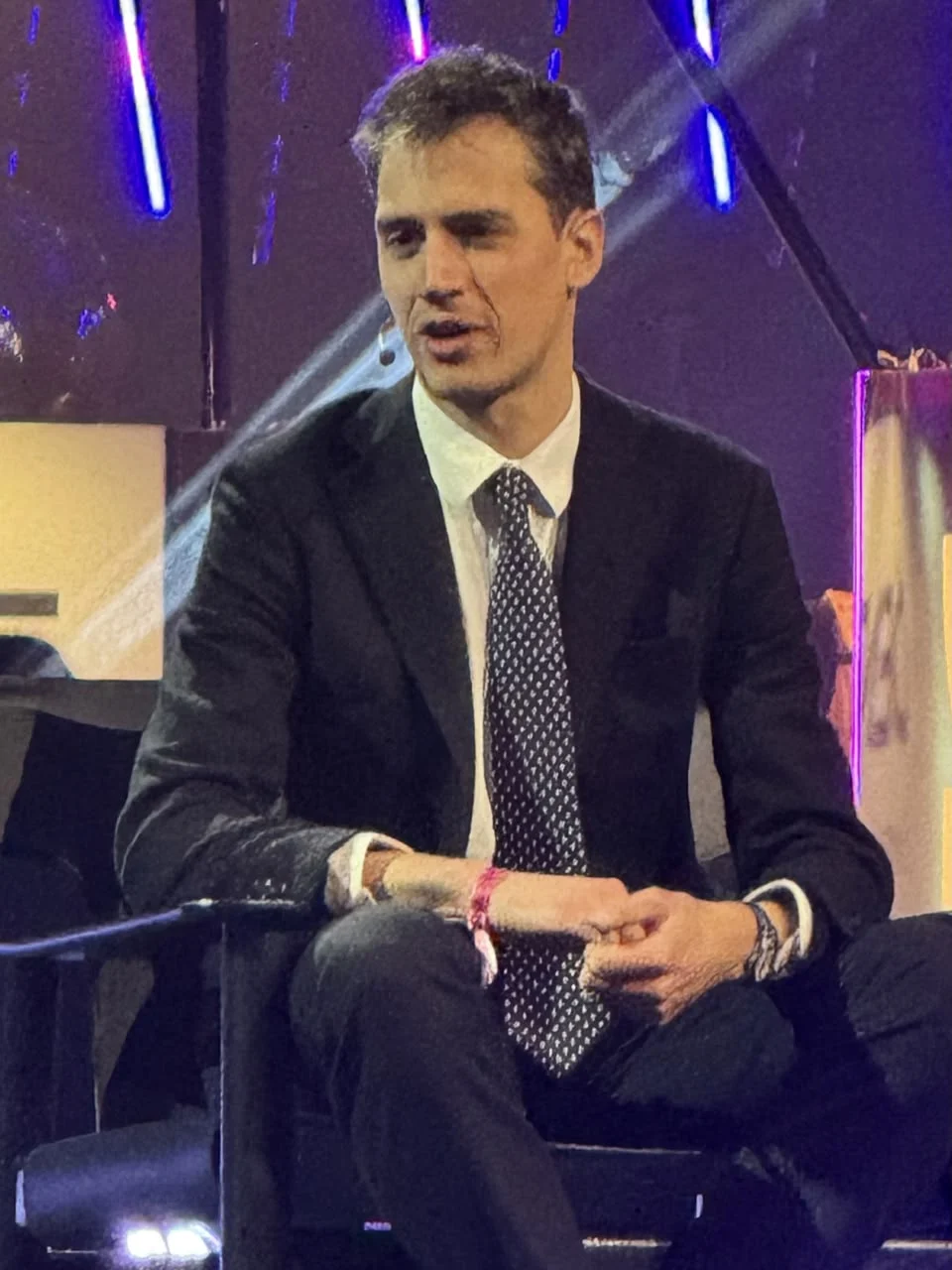
Co-founder and Chief Executive Officer of French AI company Mistral AI, Arthur Mensch, said businesses were gaining more control over AI deployment, with more affordable options allowing them to retain their intellectual property and turn it into a valuable asset.
“The AI market is changing in ways that give enterprises more control, more affordable deployment and the ability to retain their IP and turn it into a valuable asset,” Mensch said at Ai Everything Abu Dhabi 2026, which opened at the ADNEC Centre in Abu Dhabi.
He added that portability, which allows businesses to move workloads between infrastructure providers, was critical to reducing dependence on a single provider.
“Sovereignty is also a global issue. Around 55 per cent of the global economy sits outside the US and China. That creates enormous demand for alternative technology suppliers,” he stated.
Mensch argued that AI should be treated as a strategic commodity that organisations need to secure through domestic capabilities, imports and partnerships.
His comments reflect a growing debate over how governments and businesses can access advanced AI capabilities without becoming overly dependent on a small number of technology providers.
For businesses, the choice of AI systems increasingly involves more than the performance of a model. The cost of deployment, control over proprietary information and the flexibility to change infrastructure providers are also important considerations.
Infrastructure is equally critical to AI adoption, with organisations requiring adequate computing power, network connectivity and storage capacity to operate models and handle the increasing volumes of data generated and processed by AI applications.
The General Manager of H3C MENA, Hongtao Liu, said the integration of computing, networking, storage, cloud and security capabilities was becoming increasingly important as organisations in the United Arab Emirates and the wider Middle East moved from AI experimentation to production-scale deployment.
“Guided by our ‘computing x connectivity’ philosophy, we bring capabilities across compute, network, storage, cloud, security and O&M together into one AI-ready foundation that delivers the ultimate cost-performance ratio for every token,” Liu stated.
His comments highlight the infrastructure considerations businesses face as they seek to deploy AI applications at scale while managing performance and operating costs.
Senior Regional Director for India, the Middle East, Türkiye and Africa at Seagate Technology, Sameer Bhatia, said 99 per cent of organisations globally expected AI to increase their storage requirements over the next three years, citing the company’s 2026 Data Infrastructure Readiness Report.
“As AI creates more data worth keeping, the challenge is how to store more of that data reliably and efficiently at scale,” Bhatia said.
Seagate is showcasing its Exos enterprise hard drives at the event, positioning them as storage infrastructure for data centres managing growing volumes of information.
The infrastructure requirements underline the broader challenge facing businesses seeking to expand AI adoption. While more affordable models and flexible deployment options could give organisations greater control, scaling their use of the technology also requires investment in the systems needed to process, store and secure data.
The discussions took place at Ai Everything Abu Dhabi 2026, a two-day event organised by inD and hosted by the Abu Dhabi Department of Government Enablement, with Solutions+, a Mubadala company, as global partner.
The event brought together more than 400 AI exhibitors, over 180 speakers and more than 200 investors managing $100bn in assets, according to the organisers.