TLG Capital, an investment firm focused on Sub-Saharan Africa, has provided a credit facility to Nigerian solar cooling company Koolboks to support its expansion across African markets.
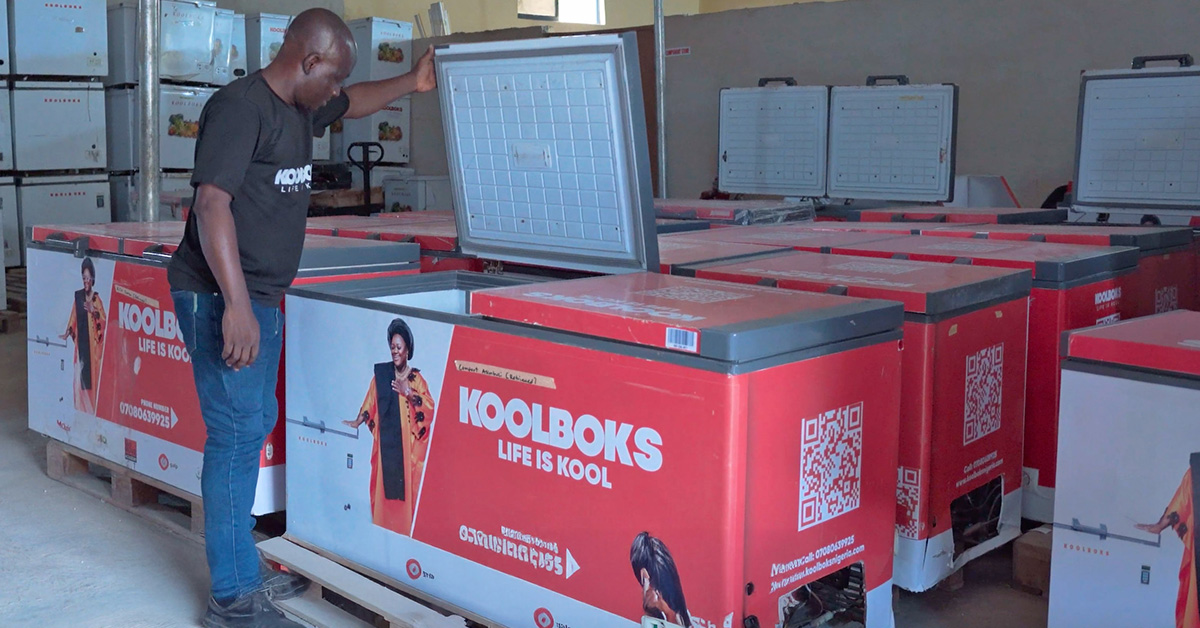
The facility will provide working capital for inventory purchases and help the company meet growing demand for its solar-powered freezers and household appliances.
The transaction brings TLG Capital’s total investments in Nigerian small and medium-sized enterprises (SMEs) to $65 million across 16 businesses over the past two years.
According to a statement from the VC firm, the financing combines TLG Capital’s private credit with a guarantee from Cascador, delivered in partnership with Morgan Stanley.
It is the second transaction involving the three partners in two months, following their financing of mobility company Drive45 in September.
TLG Capital backs expansion plans
Isha Doshi, Co-Founder and Partner at TLG Capital, said the investment was driven by the demand for Koolboks’s cold-chain solutions across African markets.
- “Koolboks has built an incredibly innovative product that addresses critical challenges for individuals and SMEs. Its ability to scale in recent years is a testament to the ingenuity of its cold chain solution, and its ability to meet the demand across many African markets,” she said.
Koolboks CEO Ayoola Dominic said the financing would support the company’s plans to expand cold-chain infrastructure across the continent.
He added that the facility would provide the capital required to increase operations, while acknowledging Cascador’s support in securing the financing.
Cascador CEO Trish Thomas said the organisation had worked with Koolboks for several years, helping the company strengthen its business as it expanded.
She said access to appropriate financing remained important for growth-stage African businesses and highlighted the partnership with TLG Capital as a way to address that need.
Koolboks expands solar cooling operations
Founded in Paris in 2018 by Ayoola Dominic and Deborah Gaël, Koolboks provides solar-powered freezers designed for businesses and households in areas with unreliable electricity supply.
Its products combine solar panels, patented ice-battery technology and pay-as-you-go payment capabilities to provide cooling during power outages. The technology offers an alternative to diesel generators and ice blocks for preserving food, beverages and other perishable products.
The company operates a lease-to-own model, allowing customers to acquire its equipment through instalment payments.
Koolboks said it has sold more than 15,000 units, employs approximately 400 people across Nigeria, Kenya and Uganda, and has shipped products to more than 25 markets.
It also operates Koolbuy, a platform that allows customers to purchase household appliances from major brands through pay-as-you-go arrangements.
TLG’s Nigerian investment portfolio
The Koolboks facility adds to TLG Capital’s investments in Nigerian SMEs, which now total $65 million across 16 companies since 2024.
Following the investment, TLG said it would continue working with Koolboks on corporate governance, environmental, social and governance (ESG) monitoring, operational performance and strategic growth.
Cascador, which focuses on supporting growth-stage Nigerian businesses, said it has worked with 80 companies since 2019. The businesses have collectively raised more than $150 million.
TLG Capital has made more than 70 investments and recorded over 35 exits across more than 25 African countries. Its flagship Africa Growth Impact Fund II targets SMEs and is backed by development finance institutions, including the International Finance Corporation (IFC), Norfund, Swedfund and Bpifrance.
TLG’s SMEs focus
In a recent interview with Nairametrics,TLG Capital founder Zain Latif spoke on why the firm sees the SME segment as a trillion dollar opportunity and how flexible private credit is emerging as a critical financing tool in markets where traditional lending remains limited.
- The firm, which has deployed more than $250 million across African markets, said its strategy focuses on refinancing expensive debt and providing growth capital to viable companies that struggle to access affordable funding.
- According to Latif, TLG’s strategy is backing promising businesses with flexible loans that promote growth.
To do that, he said the company partners closely with local banks to identify creditworthy companies that need refinancing or expansion capital.