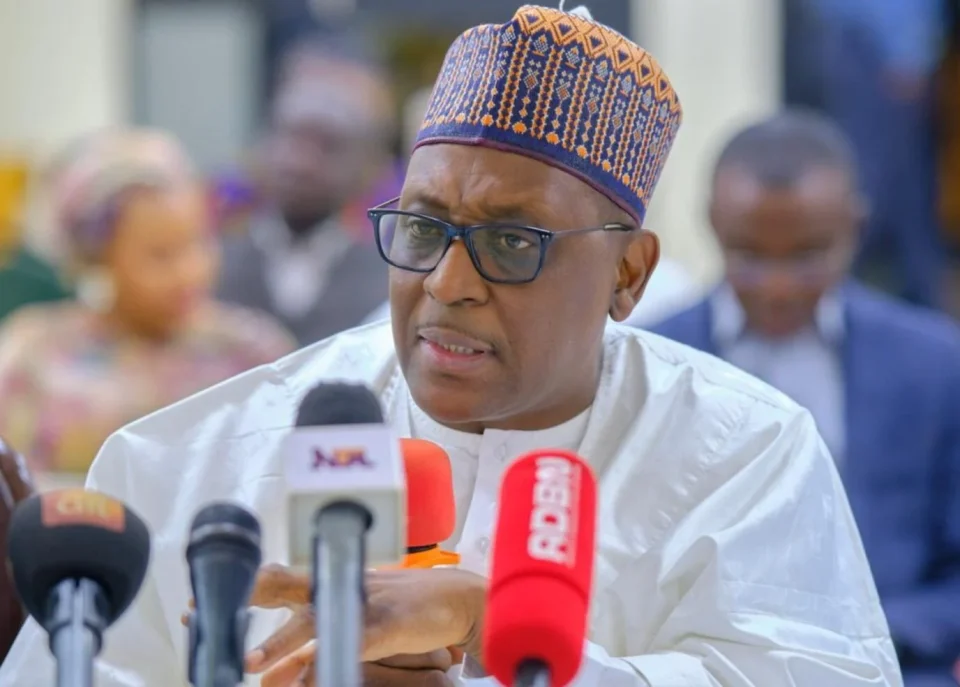
According to him, President Bola Tinubu and the Nigeria Governors’ Forum had secured commitments from federal and state governments to contribute to healthcare funding.
“By that compact, it simply means that the Federal Government will be contributing to health, and the states will also be bringing in their money,” he said.
Ovuoraye explained that states were expected to establish their own health insurance schemes alongside the national programme following the establishment of the National Health Insurance Authority.
He, however, acknowledged that expanding coverage to more Nigerians would depend largely on the availability of funding, noting that insurance programmes required adequate financial backing to meet the healthcare needs of enrollees.
“Every insurance has a cash backing, which is financing at the back end,” he said.
He said the government was gradually moving towards compulsory health insurance enrolment for civil servants and public sector workers, with plans to extend the arrangement to other organised groups.
The government is also relying on the Basic Health Care Provision Fund to strengthen healthcare delivery and improve access to insurance services.
Ovuoraye said the fund receives one per cent of the Federation’s Consolidated Revenue Fund and is being deployed to support the rehabilitation and revitalisation of primary healthcare centres.
He explained that strengthening primary healthcare facilities was central to the government’s insurance expansion strategy because it would enable more enrollees to access medical services without making direct payments at the point of care.
The programme also includes free healthcare and delivery services for women at participating health facilities.
Ovuoraye disclosed that 172 local government areas were currently benefiting from the intervention, but said the government planned to extend it to additional communities, particularly those with high populations and significant maternal and newborn health challenges.
“We should not stop at 172. The country is large,” he said.
He added that the government was also working to extend health insurance coverage to vulnerable groups, including inmates in correctional facilities, as part of efforts to make healthcare more accessible.
Despite the increase in enrolment, Ovuoraye acknowledged that Nigeria remained far from achieving its desired level of health insurance coverage, given its population of more than 240 million.
He identified population growth, large household sizes and inadequate public awareness as factors that had previously slowed enrolment.
The government, he said, was introducing additional measures to reduce out-of-pocket healthcare expenditure and ensure more Nigerians could access medical services through insurance.
“We are making efforts, but we are not there yet,” he said.
Stay informed and ahead o